

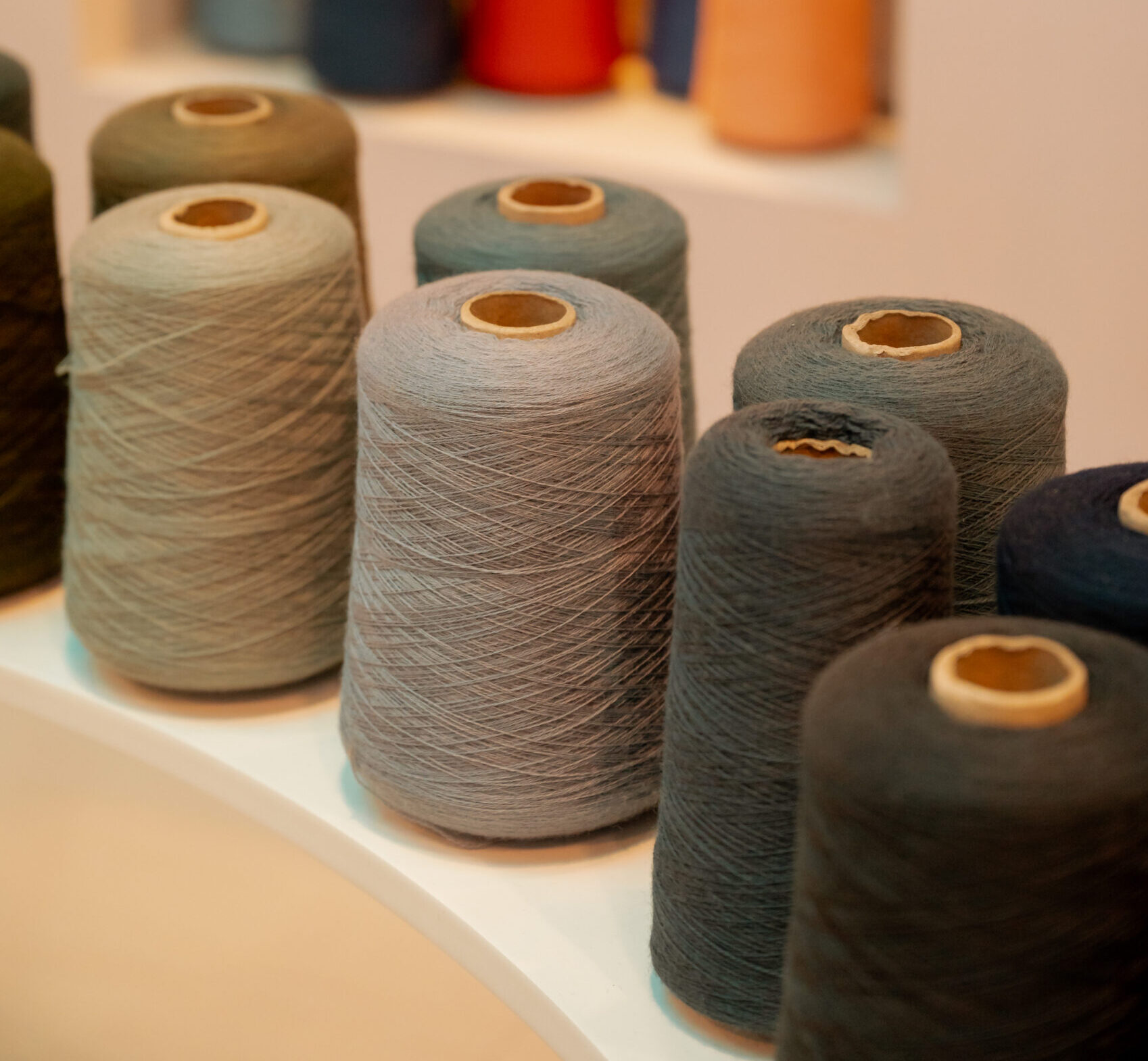
Natural biopigments: the new added value for Peruvian alpaca fiber
Innovation, sustainability, and differentiation
The global fashion and textile industry is undergoing a profound transformation. Consumers demand products with a lower environmental impact, greater transparency in production processes, and a verifiable origin story. In this context, alpaca fiber possesses an exceptional advantage: it is a natural, renewable fiber globally recognized for its quality. However, maintaining and strengthening its positioning requires incorporating innovation throughout the entire value chain.
One of the most promising advancements is the use of natural biopigments derived from spirulina. Phycocyanin, a blue pigment extracted from this microalga, emerges as a sustainable alternative for dyeing protein fibers, offering new possibilities for the development of differentiated textile products.
Beyond the technical challenge of obtaining stable blue shades, the true value of this innovation lies in its ability to generate attributes that are highly valued today by premium markets: sustainability, traceability, circular economy, and a reduction in the use of conventional chemical inputs.
The adoption of natural biopigments would enable companies in the alpaca sector to develop collections with a strengthened environmental identity, incorporating narratives of innovation and responsibility that increase their competitiveness in specialized markets in Europe, North America, and Asia.
Likewise, research into new technologies for fixing, stabilizing, and applying natural pigments opens up the possibility of developing more efficient processes that are compatible with international sustainability standards. This not only favors the preservation of alpaca's unique properties, but also helps consolidate an image of excellence linked to technological innovation.
The opportunity for the sector lies not merely in producing more, but in producing better. Higher-value markets recognize and reward products capable of demonstrating authenticity, sustainability, and differentiation. In this sense, the convergence between biotechnology and alpaca fiber represents an opportunity to build a new generation of sustainable luxury textiles.
The future of alpaca will depend on our ability to transform scientific knowledge into competitive advantages. Natural biopigments constitute an example of how innovation can strengthen an ancient tradition, generating new growth opportunities for producers, companies, and regions linked to the South American camelid chain.
Keywords: alpaca fiber, biopigments, spirulina, phycocyanin, sustainability, natural dyeing, textile innovation, circular economy.